
Friday, January 15, 2010
Thread Savy-Basic Embroidery Thread
 8:30 AM |
  Posted by
Ellen Anne Eddy |
Posted by
Ellen Anne Eddy |


Like most things, it's more complicated than it looks. And like most things we should know, it's really unhelpful to should on ourselves.
There are many brands and I have my favorites. I'll talk about that another time.There are also whole lines of thicker threads, I'll cover later. But I'd really like to lay the basis of info you need to have about basic thread for machine and free motion embroidery.
Sewing and Embroidery Threads
Sewing threads are three ply threads made for holding pieces of fabric together. They are almost always an unacceptable embroidery thread because they are not made to lie on top of each other.If you sew over them consistently, you can make a surface similar to chain mail.
Embroidery threads are usually a two ply thread. They're finer and they are made to overlap and blend into each other.
Thread Sizes
Threads usually have two numbers on them. One will be a color number. The better quality threads are consistent color-wise and don't have dye lot issues.So you can buy the same color over and over with confidence.
But the other number is the mystery. We hear about 40 weight thread. What is that?
Thread sizes are an old measure system. It's really the thread count per inch. If you laid your threads side by side, how many threads would make an inch?
So a 40 weight thread would be forty threads, side by side. A thirty weight 30 threads. 200 count percale is two hundred threads to the inch.( The same system applies to linens as well). For embroidery purposes, any thread between 12-40 weight can usually work through a top stitching 90 needle( see my early blog on Needle Knows).
These threads can be used either in the bobbin or the needle, zigzag or straight stitch, computerized or free motion. They are the backbone of embroidery.
What's My Thread Made Of
Threads are made of a number of different fibers.Some are more successful than others. It's worth knowing how these fibers react when you choose your threads.
Cotton is probably the most basic embroidery thread. It's strong, comes in many colors and is versatile. It has one flaw that to my mind is unforgivable. It's not shiny. Magpie that I am, I will confess, I never use it.
Rayon is the most common embroidery thread. It has a lovely sheen and a fine color range. But it's never strong. Some brands are better than others. I use rayon that's in my sewing box. But I've stopped buying it for myself or for students, unless I simply can't get the color any other way. It's never as strong as polyester. In fairness, I do think it blends better than polyester. But the breakage is an annoyance I'm unwilling to offer to students or put up with myself.
Polyester threads are the gold standard of the 40 weight crowd. They're strong, and the color range is astonishing. They are my go-to, war horse 40 weight thread.
Acrylic threads truly lead me to ask the question, "Why?" These threads are so unstable I don't even want to see them in someone's stash. My personal experience with them has been too unpleasant for words. I can't recommend them. They seem to be set up for computerized embroidery, and perhaps they work better for that.
Garbage in, Garbage out
There are threads I consider a bargain. But when someone tells me about this wonderful thread they found that's so cheap, I do need to restrain my eye roll.Usually cheap thread is just that. It's not merely inexpensive. It's cheap. Save money on something else. You're time is valuable, and cheap thread usually wastes mountains of time in breakage and bad behavior. Old thread is also a case in point. It will get too old to use, and at that point is no bargain.
Wrapping it up
All that said, the real test of any thread is how it works in your machine.Keep track. You may find that your machine has very different opinions, and in the end, those are the only ones that count for you.

Thread Savy-Basic Embroidery Thread
Like most things, it's more complicated than it looks. And like most things we should know, it's really unhelpful to should on ourselves.
There are many brands and I have my favorites. I'll talk about that another time.There are also whole lines of thicker threads, I'll cover later. But I'd really like to lay the basis of info you need to have about basic thread for machine and free motion embroidery.
Sewing and Embroidery Threads
Sewing threads are three ply threads made for holding pieces of fabric together. They are almost always an unacceptable embroidery thread because they are not made to lie on top of each other.If you sew over them consistently, you can make a surface similar to chain mail.
Embroidery threads are usually a two ply thread. They're finer and they are made to overlap and blend into each other.
Thread Sizes
Threads usually have two numbers on them. One will be a color number. The better quality threads are consistent color-wise and don't have dye lot issues.So you can buy the same color over and over with confidence.
But the other number is the mystery. We hear about 40 weight thread. What is that?
Thread sizes are an old measure system. It's really the thread count per inch. If you laid your threads side by side, how many threads would make an inch?
So a 40 weight thread would be forty threads, side by side. A thirty weight 30 threads. 200 count percale is two hundred threads to the inch.( The same system applies to linens as well). For embroidery purposes, any thread between 12-40 weight can usually work through a top stitching 90 needle( see my early blog on Needle Knows).
These threads can be used either in the bobbin or the needle, zigzag or straight stitch, computerized or free motion. They are the backbone of embroidery.
What's My Thread Made Of
Threads are made of a number of different fibers.Some are more successful than others. It's worth knowing how these fibers react when you choose your threads.
Cotton is probably the most basic embroidery thread. It's strong, comes in many colors and is versatile. It has one flaw that to my mind is unforgivable. It's not shiny. Magpie that I am, I will confess, I never use it.
Rayon is the most common embroidery thread. It has a lovely sheen and a fine color range. But it's never strong. Some brands are better than others. I use rayon that's in my sewing box. But I've stopped buying it for myself or for students, unless I simply can't get the color any other way. It's never as strong as polyester. In fairness, I do think it blends better than polyester. But the breakage is an annoyance I'm unwilling to offer to students or put up with myself.
Polyester threads are the gold standard of the 40 weight crowd. They're strong, and the color range is astonishing. They are my go-to, war horse 40 weight thread.
Acrylic threads truly lead me to ask the question, "Why?" These threads are so unstable I don't even want to see them in someone's stash. My personal experience with them has been too unpleasant for words. I can't recommend them. They seem to be set up for computerized embroidery, and perhaps they work better for that.
Garbage in, Garbage out
There are threads I consider a bargain. But when someone tells me about this wonderful thread they found that's so cheap, I do need to restrain my eye roll.Usually cheap thread is just that. It's not merely inexpensive. It's cheap. Save money on something else. You're time is valuable, and cheap thread usually wastes mountains of time in breakage and bad behavior. Old thread is also a case in point. It will get too old to use, and at that point is no bargain.
Wrapping it up
All that said, the real test of any thread is how it works in your machine.Keep track. You may find that your machine has very different opinions, and in the end, those are the only ones that count for you.
Wednesday, January 13, 2010
Hoop-Dee-Doo

Most people who do even minimal free motion embroidery are familiar with the distortion issue. It's only natural. You run that much thread through that much fabric and your fabric ruffles like a child's party dress. There are a bunch of tricks that help, but nothing actually cures it. It's the same situation as having a cold. We can make it better but it doesn't go away. Stitch choices, and stabilizers help, and we'll talk about those another day. But one of the best helps is a hoop.
A hoop keeps your fabric from bunching up, going down the needle hole and all kinds of other bad behavior. In holding the fabric tightly, it makes your machine stitch better. And a hoop is something you can hold on to and manipulate easier than just your fabric. Good hoops last for ever and are worthy studio tools.
I have several hoops in my studio for different purposes. And several hoops I wouldn't use for anything but ring toss. The biggest issue with hooping comes down to two factors: How thick is your project? and How densely did you intend to stitch.
The Hoop That Came With Your Machine
A lot of times people will come in with the hoop that came with their embroidery machine. It's not a bad hoop. It usually has good grip and the sizes are usually sensible. They don't accommodate anything thick though. They're made for one layer of fabric and a stabilizer, maybe.
The Hoop That Came With Your Machine
A lot of times people will come in with the hoop that came with their embroidery machine. It's not a bad hoop. It usually has good grip and the sizes are usually sensible. They don't accommodate anything thick though. They're made for one layer of fabric and a stabilizer, maybe.
The Hardwood Hoop
I use a German hard wood hoop that has a screw. I'm not being nationalistic here. That's simply what they're called. I assume they do come from Germany, but I don't really know.They're made of a dense thin hardwood. These hoops are narrow and fit under the machine foot. They also have a screw with a slot on one side that lets you tighten the surface, which insures a better stitch.I keep an 8", and a 10" square one. Any hoop over 10" will not give consistent enough support and you'll get skipped stitches.
This is the hoop of choice for free motion embroidery on a piece of lightly stabilized cotton. I use them when I'm embroidering a sold image on a single layer of fabric. You can put a hoop on a project with more than one layer, but it get's harder as they layers add up.
Did you fuse on several sheers? Have a layer of cut away or embroider on the top as well? At a certain point your wooden hoop is hard to use.That's the time to bring out
Did you fuse on several sheers? Have a layer of cut away or embroider on the top as well? At a certain point your wooden hoop is hard to use.That's the time to bring out

The Halo
This is Sharon Schamber's creation. It's a metal weighted hoop dipped in a rubber substance that grips. Originally I believe she made them for long arm stitching and they're great for that. Instead of clamping them on, the weight holds them in place and you can slide it along as you stitch.
When I saw these, I bought three of them on sight. Two for the studio and one to travel. They are an astonishing help for free motion. I often have a piece where I've stabilized it with a layer of fused on felt or several layers of fused sheers onto window shade interfacing.I bring them into class because I consider them an essential studio tool. You can also stack two of them together for more stability.
They do not work for any embroidery that isn't solidly backed by stabilizer, so you'll want a wooden hoop for that.
Ring Toss Hoops:
These are the hoops that are cruel hoaxes. They have no use in machine embroidery. I take them away from students in class because I'm afraid they'll hurt themselves on them.
These are the hoops that are cruel hoaxes. They have no use in machine embroidery. I take them away from students in class because I'm afraid they'll hurt themselves on them.
Spring Hoops
I never use a spring hoop, because they tend to do just that.Sprong! Right while you're sewing! I really take a down on anything that springs up out of my project while I'm stitching.I consider them dangerous and I take them away from students in class and let them borrow one of mine if they need to.
Cheap wooden hoops
You find these at craft stores. They're thick. The wood splinters and cracks. I believe they're made for hand-embroiderers but I wouldn't use it for that. They're not only inexpensive, but they're cheap too in their making. Who needs splinters?
Wrapping it up
Wrapping it up
Good hoops make your work easier, flatter, and much more fun. You can find Sharon's halo at her web site at http://www.sharonschamber.com/shopping%20cart/new%20products/newproducts.htm
You can find good hardwood hoops at most sewing machine stores. I bring both kinds to students in class when I'm teaching. A good hoop helps make for a good sewing day.
Hoop-Dee-Doo
Most people who do even minimal free motion embroidery are familiar with the distortion issue. It's only natural. You run that much thread through that much fabric and your fabric ruffles like a child's party dress. There are a bunch of tricks that help, but nothing actually cures it. It's the same situation as having a cold. We can make it better but it doesn't go away. Stitch choices, and stabilizers help, and we'll talk about those another day. But one of the best helps is a hoop.
A hoop keeps your fabric from bunching up, going down the needle hole and all kinds of other bad behavior. In holding the fabric tightly, it makes your machine stitch better. And a hoop is something you can hold on to and manipulate easier than just your fabric. Good hoops last for ever and are worthy studio tools.
I have several hoops in my studio for different purposes. And several hoops I wouldn't use for anything but ring toss. The biggest issue with hooping comes down to two factors: How thick is your project? and How densely did you intend to stitch.
The Hoop That Came With Your Machine
A lot of times people will come in with the hoop that came with their embroidery machine. It's not a bad hoop. It usually has good grip and the sizes are usually sensible. They don't accommodate anything thick though. They're made for one layer of fabric and a stabilizer, maybe.
The Hoop That Came With Your Machine
A lot of times people will come in with the hoop that came with their embroidery machine. It's not a bad hoop. It usually has good grip and the sizes are usually sensible. They don't accommodate anything thick though. They're made for one layer of fabric and a stabilizer, maybe.
The Hardwood Hoop
I use a German hard wood hoop that has a screw. I'm not being nationalistic here. That's simply what they're called. I assume they do come from Germany, but I don't really know.They're made of a dense thin hardwood. These hoops are narrow and fit under the machine foot. They also have a screw with a slot on one side that lets you tighten the surface, which insures a better stitch.I keep an 8", and a 10" square one. Any hoop over 10" will not give consistent enough support and you'll get skipped stitches.
This is the hoop of choice for free motion embroidery on a piece of lightly stabilized cotton. I use them when I'm embroidering a sold image on a single layer of fabric. You can put a hoop on a project with more than one layer, but it get's harder as they layers add up.
Did you fuse on several sheers? Have a layer of cut away or embroider on the top as well? At a certain point your wooden hoop is hard to use.That's the time to bring out
Did you fuse on several sheers? Have a layer of cut away or embroider on the top as well? At a certain point your wooden hoop is hard to use.That's the time to bring out
The Halo
This is Sharon Schamber's creation. It's a metal weighted hoop dipped in a rubber substance that grips. Originally I believe she made them for long arm stitching and they're great for that. Instead of clamping them on, the weight holds them in place and you can slide it along as you stitch.
When I saw these, I bought three of them on sight. Two for the studio and one to travel. They are an astonishing help for free motion. I often have a piece where I've stabilized it with a layer of fused on felt or several layers of fused sheers onto window shade interfacing.I bring them into class because I consider them an essential studio tool. You can also stack two of them together for more stability.
They do not work for any embroidery that isn't solidly backed by stabilizer, so you'll want a wooden hoop for that.
Ring Toss Hoops:
These are the hoops that are cruel hoaxes. They have no use in machine embroidery. I take them away from students in class because I'm afraid they'll hurt themselves on them.
These are the hoops that are cruel hoaxes. They have no use in machine embroidery. I take them away from students in class because I'm afraid they'll hurt themselves on them.
Spring Hoops
I never use a spring hoop, because they tend to do just that.Sprong! Right while you're sewing! I really take a down on anything that springs up out of my project while I'm stitching.I consider them dangerous and I take them away from students in class and let them borrow one of mine if they need to.
Cheap wooden hoops
You find these at craft stores. They're thick. The wood splinters and cracks. I believe they're made for hand-embroiderers but I wouldn't use it for that. They're not only inexpensive, but they're cheap too in their making. Who needs splinters?
Wrapping it up
Wrapping it up
Good hoops make your work easier, flatter, and much more fun. You can find Sharon's halo at her web site at http://www.sharonschamber.com/shopping%20cart/new%20products/newproducts.htm
You can find good hardwood hoops at most sewing machine stores. I bring both kinds to students in class when I'm teaching. A good hoop helps make for a good sewing day.
Tuesday, January 12, 2010
The Needle Knows

Are needles all the same?
Yes and no.
Yes, they have a shaft and a hole for the thread to go in.
No, there are huge differences in what that shaft and hole look like, that make them act very very differently.
We are, to be clear, talking strictly about home sewing machine needles. These always have a flat side in back, and that's one way to identify them.
Within that group there are several possibilities.
There are a bunch of specialty needles for certain things. I'm not going to touch on those, because they're labeled for those purposes.
Needle Brands
You can get needles that have every kind of sewing machine branded on the front. Basically Schmetz makes all of those needles. They are identical. Schmetz needles are an industry standard and well worth looking for. The only difference is Singer needles. Singer has it's own style and I recommend you use Singer needles only with Singer Machines. You can use a Schmetz needle on a Singer. But don't use a Singer needle on any other kind of machine. It may scar the hook.
Organ needles come in huge boxes and are suggested for free motion. They work quite well and are inexpensive. But they only come in point sizes and ball point/sharp variations. I think they're better used for computerized embroidery.
Point Styles
Sharp Point Needle
These needles have a sharp point. That means they have a clean punching power and create a smooth stitch line.They're set up for woven fabric. I always use a sharp needle for all free motion embroidery.
Ball Point Needles
These needles have a ball point at the edge. They wiggle through the fabric. They're set up to sew knitted goods without snagging. Because of how they're built, they don't really create a smooth stitch line. Although I don't use them with my Bernina's and Pfaffs, they are recommended for Janome/ New Home Machines for freemotion.
The Universal Needle
If you go into a shop and ask for needles and don't tell them what you want, this is what they'll give you. It' s a general multi purpose needle that does nothing really well.This is a combination of sharp and ball point needles. It's a horse designed by a committee. It kind-of sort-of works all the time, sort-of. It has a sharp needle shape with a gently balled end. Again, it doesn't leave a clean stitch line. I would avoid it for free motion. Better to use the right tool, than the almost right tool.
Needle Sizes
Needles are labeled with European and American Sizes. European sizes are 60.70.80.90,100,110. The American sizes are 10.12.14.16.18. Larger numbers mean larger needles.
For most embroidery I like a #90/14. If it's leaving too large a hole try a size smaller. If it's breaking constantly, try a size larger.
Topstitching vs. Regular Eye
A topstitching needle has a special big eye. This is so helpful. You can see it to thread it. But it reduces thread breakage massively as well.
Wrapping it up
My favorite needle is a 90 Topstitching needle. I find it reduces breakage and gives me a fabulous straight line to draw with. Try it yourself. I find it makes such a difference.
The Needle Knows
Are needles all the same?
Yes and no.
Yes, they have a shaft and a hole for the thread to go in.
No, there are huge differences in what that shaft and hole look like, that make them act very very differently.
We are, to be clear, talking strictly about home sewing machine needles. These always have a flat side in back, and that's one way to identify them.
Within that group there are several possibilities.
There are a bunch of specialty needles for certain things. I'm not going to touch on those, because they're labeled for those purposes.
Needle Brands
You can get needles that have every kind of sewing machine branded on the front. Basically Schmetz makes all of those needles. They are identical. Schmetz needles are an industry standard and well worth looking for. The only difference is Singer needles. Singer has it's own style and I recommend you use Singer needles only with Singer Machines. You can use a Schmetz needle on a Singer. But don't use a Singer needle on any other kind of machine. It may scar the hook.
Organ needles come in huge boxes and are suggested for free motion. They work quite well and are inexpensive. But they only come in point sizes and ball point/sharp variations. I think they're better used for computerized embroidery.
Point Styles
Sharp Point Needle
These needles have a sharp point. That means they have a clean punching power and create a smooth stitch line.They're set up for woven fabric. I always use a sharp needle for all free motion embroidery.
Ball Point Needles
These needles have a ball point at the edge. They wiggle through the fabric. They're set up to sew knitted goods without snagging. Because of how they're built, they don't really create a smooth stitch line. Although I don't use them with my Bernina's and Pfaffs, they are recommended for Janome/ New Home Machines for freemotion.
The Universal Needle
If you go into a shop and ask for needles and don't tell them what you want, this is what they'll give you. It' s a general multi purpose needle that does nothing really well.This is a combination of sharp and ball point needles. It's a horse designed by a committee. It kind-of sort-of works all the time, sort-of. It has a sharp needle shape with a gently balled end. Again, it doesn't leave a clean stitch line. I would avoid it for free motion. Better to use the right tool, than the almost right tool.
Needle Sizes
Needles are labeled with European and American Sizes. European sizes are 60.70.80.90,100,110. The American sizes are 10.12.14.16.18. Larger numbers mean larger needles.
For most embroidery I like a #90/14. If it's leaving too large a hole try a size smaller. If it's breaking constantly, try a size larger.
Topstitching vs. Regular Eye
A topstitching needle has a special big eye. This is so helpful. You can see it to thread it. But it reduces thread breakage massively as well.
Wrapping it up
My favorite needle is a 90 Topstitching needle. I find it reduces breakage and gives me a fabulous straight line to draw with. Try it yourself. I find it makes such a difference.
Wednesday, December 23, 2009
Musings: Art outside of the Box: Pushing back the Dark: Thinking does make it so.


It's these times I'm so grateful for an artist's life.Because we endlessly get to build the world we want. You could be confused by my work, thinking I was copying nature. By my own nature, I copy badly. Now imagining? That I 'm good at. To imagine wild flowers that don't really exist. Dragonflies out of season? Of course! My yard in bloom instead of in ice. Please!!!!!!!!!!!!!!!!!!!!!!!!!I also can image I've put my keys away and really truly believe it. It's a mixed blessing.But aren't they all.

Subscribe to:
Comments (Atom)
Review of Thread Magic Garden

From the Subversive Stitch
Review of Thread Magic Garden

Book Review from Golden Dog Quilting
C&T Blog

My Studio Garden: A blog at C&T Publishing
Like us on Facebook

Quiltposium, Fall2011

Ellen's New Article, Dance of Design
Essential Embroidery Stitches: Free Hand and Machine Embroidery Designs and Techniques.

Get this free book from Quilting Arts. It has a series of articles I wrote called Defining the Line.
The Butterfly Effect

My Blog List
-
22 hours ago
-
5 days ago
-
2 months ago
-
3 months ago
-
6 months ago
-
2 years ago
-
5 years ago
-
5 years ago
-
5 years ago
-
7 years ago
-
7 years ago
-
8 years ago
-
9 years ago
-
9 years ago
-
9 years ago
-
9 years ago
-
10 years ago
-
10 years ago
-
11 years ago
-
11 years ago
-
11 years ago
-
11 years ago
-
12 years ago
-
12 years ago
-
12 years ago
-
12 years ago
-
13 years ago
-
13 years ago
-
13 years ago
-
13 years ago
-
13 years ago
-
13 years ago
-
13 years ago
-
13 years ago
-
14 years ago
-
-
-


Guest Blog On Subversive Stitchers!
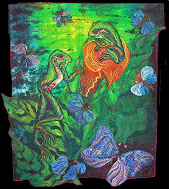
The Stories Tell Me

Facebook Badge

Guest Blog On Quilt Gallery
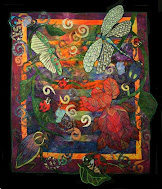
http://quiltinggallery.com/2010/08/12/dancing-in-the-light/
